
This has been another strange year for wildlife and due to the mild winter I found my first Peacock butterfly of the year during February. Then, by mid March, there were good numbers of the common Hoverflies, Bumblebees, Oil Beetles, Ladybirds and various other beetles. Early flying male Brimstone butterflies were frequently seen. This bonanza of species lasted until mid June when numbers of many species suddenly crashed due to the unusually hot and dry weather.
Even my garden birds have become lethargic during the hottest part of the day. The Blue and Great Tits are still using my feeders and bird bath, along with a few Jackdaws and juvenile Magpies, during the cooler early morning period. Many birds have probably been lured away by copious quantities of spilt grain from the barley fields only a short flight away.
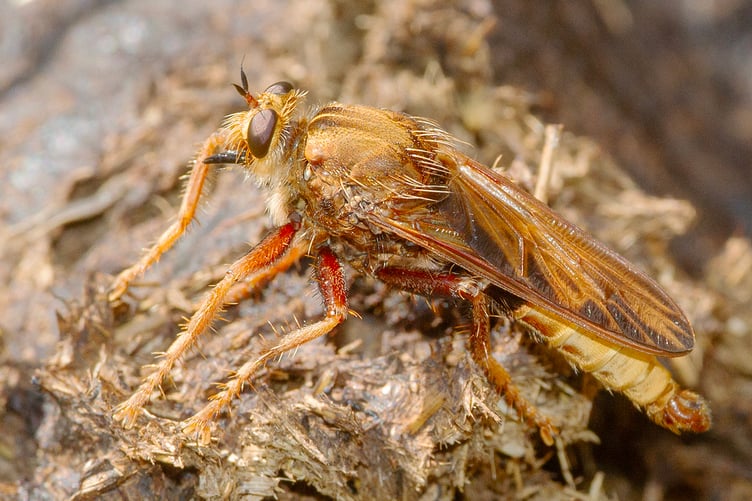
However, a few insects do well in hot weather. Robberflies can be seen resting on leaves after a heavy meal of small flies and various bugs. The most stunning species is the Hornet Robberfly, which has a striking bright yellow and dark brown colour scheme. It is always worth checking out fresh cowpats to find one, although onlookers may think you are totally mad. I found 3 at Soar Mill Cove during mid July which was about a month early.
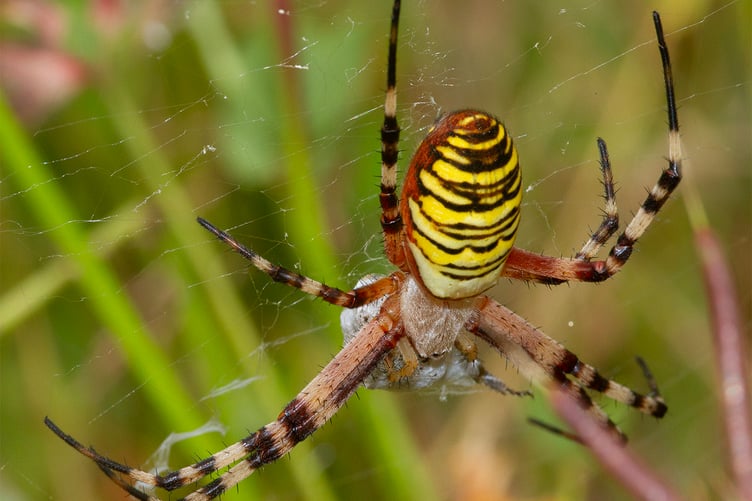
Wasp Spiders (Argiope bruennichi) can be up to 20 mm long and are also heat loving creatures which are now established along the south coast, although I have found them slightly further inland. Look for large vertical webs at the base of tall dry grass stems from mid August. But most of the few which I have discovered were accidental finds while attempting to photograph something else.
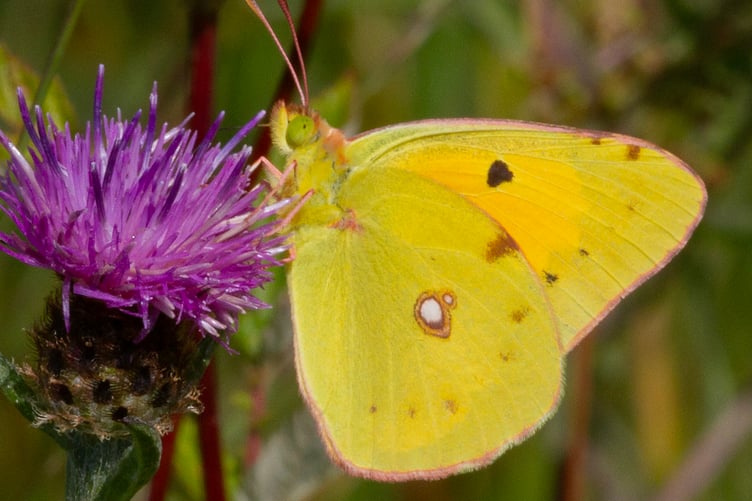
Most of the summer butterflies seem to be coping well with these dry conditions, providing they have plenty of nectar rich flowers. There have been good numbers of Meadow Brown and quite a few Gatekeepers. This has also been a good year for Clouded Yellows which are migrants from Southern Europe, so numbers vary considerably from one year to another. I even saw one in my garden.
Small numbers of their caterpillars have been able to survive mild winters here which means they may eventually become established as a UK species. Previously, they were mostly seen along the south coast but are now being found further inland.
Their bright sulphur yellow colour should make them easy to identify although pale specimens could be confused with the very similar looking Pale Clouded Yellow or Berger’s Clouded Yellow although both of those species are rare.
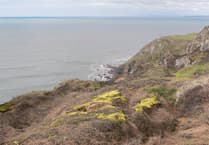



Small Pearl-bordered Fritillary butterflies occur at a few Dartmoor locations and in a good year they can occasionally be found along the south coast, particularly between Bolt Tail and Prawle Point during June and July. In some years there is also a second generation in August. Their caterpillars feed on Wild Violets.
Hummingbird Hawkmoths have done well in my garden and I have seen several hovering with their wings beating so fast they become just a blur, but usually vanishing as soon as I get my camera out. Many will be immigrants but a few caterpillars are known to overwinter here inside buildings.
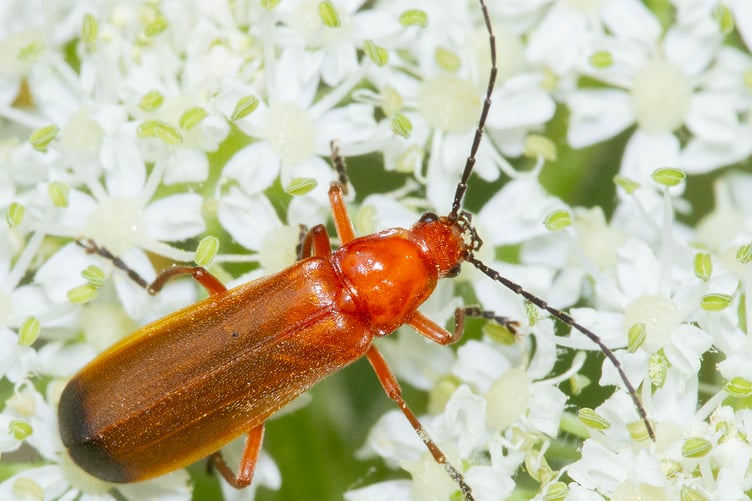
Good numbers of Common Red Soldier Beetles always seem to be be present at most rural locations and pairs are often seen during the mid summer period, particularly on hogweed plants.
This prolonged spell of hot weather has been good for a few marginal species but many traditional summer living creatures have suffered a potential disaster. While the mild spring was good for many hoverfly species the mid summer heat has been disastrous with low numbers of most species. It will probably need several cooler damper seasons for them to fully recover.
Comments
We've recently changed our login process. If you have an account for commenting, you will need to re-register on the login window.
This article has no comments yet. Be the first to leave a comment.