
A decision that dices up Devon in an entirely new way is likely to have a fundamental impact on each of the county’s residents.
The full-scale overhaul announced in Westminster on Thursday (16 July) granted permission for both Plymouth and Exeter to expand, while also giving the nod for Torbay to subsume parts of its neighbours too.
That leaves a vast swathe of Devon – mostly rural and coastal – smashed together to create a monolithic council with no obvious economic or administrative centre.
What this means is that Devon’s existing 11 councils will be transformed into four larger councils with greater responsibilities.
With the process named ‘local government reorganisation’, or LGR for short, it can easily be dismissed as meaningless bureaucracy that won’t really change anything.
But that couldn’t be further from the truth.
Out with the old
Aspects of the rationale behind LGR are to simplify local democracy, put decision-making closer to communities, and, the government claims, save money.
At present, most of Devon operates under the so-called two-tier system, which means that within the same geographic area, one county council and eight district councils operate.
Devon County Council has responsibility for education, highways and social care, among other things across its entire administrative area, while district councils oversee the likes of planning, waste and recycling collections, and housing within their boundaries.




That means, if you live in the likes of North Devon, the South Hams, Teignbridge, or East Devon, for example, the county council is responsible for fixing the potholes but the district council makes planning decisions.
And arguably the most ridiculous one is that the county council will give you parking tickets for road-based parking infringements, but districts fine you for overstaying your welcome in car parks.
The government wants all councils to be unitary – meaning one council responsible for all the services – and that’s how the four new councils in Devon will be set up.
It’s how Plymouth City Council and Torbay Council already operate, and such a system means that residents can’t complain to the wrong council, whereas in Devon now they have to know which responsibilities are overseen by either the county or district council.
While there’s undeniable logic to it – and many local politicians accept the current two-tier system needs to change – it inevitably has consequences.
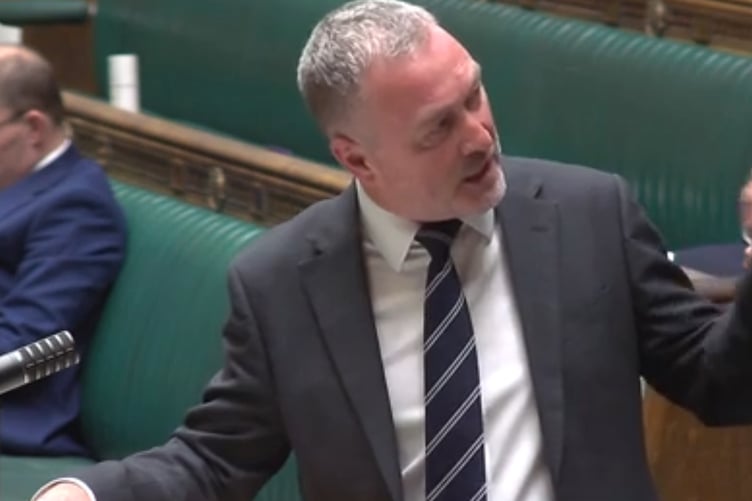
And judging by the reaction to what was announced by the secretary of state for housing, communities and local government, Steve Reed, there are fears these could be stark.
Redrawing the map
Each of Devon’s 11 councils sent proposals to the government with their ideas for how LGR should be implemented.
Mr Reed has opted to support the suggestion put forward by both Exeter City Council and Plymouth City Council.
This envisioned Exeter taking on 15 parishes from Teignbridge, 28 from East Devon and six from Mid Devon to create a notional ‘Greater Exeter’.
Plymouth’s desire was to expand east by taking in 13 parishes from the South Hams, and the suggestion for Torbay was to subsume 22 parishes in total from Teignbridge and the South Hams.
But that leaves what the proposal loosely describes as “the rest of Devon”, likely stretching from the county’s most southerly location – Prawle Point – and stretching to its most northerly outcrop of Foreland Point near Lynmouth, then west around the expanded Plymouth to the Cornwall border, and East around the expanded Exeter all the way to Axminster and the Dorset and Somerset borders.
Critics – which include Conservative, Liberal Democrat and Reform UK politicians from Devon – claim that it’s no surprise a Labour government opted for a proposal put forward by two Labour councils.
The most severe criticism suggests it is political gerrymandering – the process of altering electoral maps to favour the governing party – but in Parliament, Mr Reed countered this by saying that the proposals he announced for areas across the country had cross-party support.
There were even examples of Labour MPs stating their preferred option was not taken forward.
Regardless of the whys or wherefores, the decision isn’t just a meaningless paper exercise – it will have a big impact on residents.
Change is coming
Whether it’s the size of your council tax bill, which council looks after your child who has special educational needs or disabilities (SEND), who organises the care for your vulnerable or elderly relative, approves housing developments, repairs potholes or collects your rubbish, the change will impact it all.
While it might seem trivial as to who collects your bins, there could be genuine issues here given that some districts pride themselves on having top-draw recycling rates, yet residents who benefit from those now could be sucked up into a new council area where collections are worse.
Perhaps more serious is children’s and adult social care. While Plymouth and Torbay already oversee these responsibilities, the number of people they do this for will rise. Plus, those people will be moving from one system to another, which could cause problems.
At present, Devon County Council oversees both adult and children’s services in the county – excluding Plymouth and Torbay – but these vast services will now be split up.
Independent concern has already been raised about this. The Children’s Services Commissioner for Devon County Council, Nigel Richardson CBE, warned in a report last year that one of his two major concerns for children’s services was LGR.
“Given the positive improvement trajectory I have seen and identified in this report and the critical importance of having a well-led and well-functioning children’s services for the local population, anything that breaks that model would risk stopping the existing work in its tracks with an even bigger risk that things would quickly slip backwards,” he said.
Beyond the impact on services, there’s identity. The likes of Exmouth will be part of Greater Exeter, while areas of the South Hams and Teignbridge will be included in either Greater Plymouth or expanded Torbay. Some residents might feel buoyed by this, others misery.
Then there’s representation. The number of councillors that represent the wards and divisions of Devon will drop. That means councillors will be overseeing a larger patch, that has responsibility for more services, and that encompasses more people.
If you think it’s difficult getting hold of your councillor now, some fear that challenge will only become greater.
With the ‘rest of Devon’ council spanning around 110 miles north to south, it could also be a trek to the authority’s headquarters – wherever that may be.
Here before you know it
While these changes aren’t happening immediately, in local government timeframes they are fairly breakneck.
Elections for the new councils will take place next year, under the proposals laid out in Parliament.
Once those are done, there will be a year where the existing councils will pass power to the so-called ‘shadow authorities’, which will officially come into being in April 2028.
That’s less than two years for four new councils to be created, services handed over, budgets set, councillors elected, staff transferred or hired, and a whole lot more.
There is the possibility of a Judicial Review; however, it’s important to note that these do not necessarily decide whether a decision is right or wrong, but rather whether the correct process was followed in determining it.
If a decision was taken unlawfully, then it could be that it gets reversed, but such a review would not state that there should be a preferential outcome.
The government has pledged financial support for the process, including some cash to help make sure the transfer of children’s and adult services goes smoothly.
Mr Reed said each new unitary council would get around £1 million to help support the process.
The government hopes that will pale into insignificance if its predictions for eventual savings come true.
For the residents and citizens of Devon, though, while financial viability of the councils that serve them is important, how they function and operate on day one will be the most vital factor.
Comments
We've recently changed our login process. If you have an account for commenting, you will need to re-register on the login window.
This article has no comments yet. Be the first to leave a comment.