
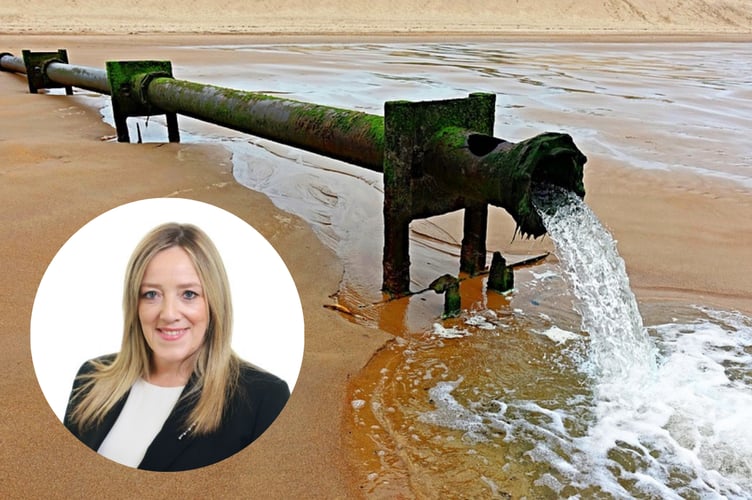
When South West Water appeared in court over its role in the Brixham Cryptosporidium outbreak, its lawyers argued the company's financial position should be taken into account when calculating its total fine, saying the level of debt should be considered to avoid placing further strain on customers and stakeholders.
Yet, in the same financial year, Pennon Group's annual report shows former Chief Executive Susan Davy received £360,000 in bonus and long-term incentive (LTIP) payments on top of her £513,000 salary, plus a “security allowance”.
There is no suggestion that the payments breached any rules or were made improperly. The LTIP formed part of Pennon's approved remuneration policy and was linked to performance measures set several years earlier.
But for many customers still living with the consequences of repeated sewage pollution incidents and one of the most significant drinking water contamination events in recent UK history, the figures raise an unavoidable question: should executives continue to receive substantial incentive payments when public confidence in the company remains so fragile?
The Brixham outbreak in 2024 left thousands of households without safe drinking water, caused widespread illness and prompted intense scrutiny of South West Water's operations.
It also became part of a wider picture of environmental concerns, with continuing sewage discharges - including incidents regulators have deemed unlawful - and persistent criticism that infrastructure improvements have not kept pace with evolving needs.
Against that backdrop, Pennon's latest annual report presents a contrasting narrative. The company speaks of rebuilding trust, improving operational performance and delivering significant investment through the next regulatory period.
It adds that executive incentive awards are based on long-term performance criteria approved in advance, rather than solely on operational events occurring in a single year.
That distinction is important when reviewing the payments disclosed in the report, which are not simply rewards for the events of 2025/26. They reflect payment arrangements designed to incentivise longer-term business performance, including measures linked to shareholder outcomes.
Whether that framework continues to reflect public expectations is another matter. Should stakeholder interests not also be considered?




Water companies occupy a monopoly. Customers cannot choose an alternative supplier, and the service they provide is fundamental to public health and the environment - water is not a luxury.
It is therefore reasonable to ask whether commission policies should place greater emphasis on customer outcomes, environmental performance and resilience, particularly following major operational failures.
If the company's finances were sufficiently constrained to argue in court that debt should be considered when determining the level of a criminal fine, how is it simultaneously able to pay substantial long-term incentive awards and additional executive benefits? Especially to a resigning CEO who, to many, has borne little to no accountability for her time overseeing the company.
That is not a legal question but an ethical one.
Pennon may argue, with justification, that contractual remuneration arrangements cannot simply be abandoned whenever a company faces public criticism. Shareholders approved the policy, and awards were assessed against predetermined criteria.
However, legality and public acceptability are not always the same thing.
As scrutiny of the water industry intensifies, the debate may no longer centre on whether these payments comply with ‘the rules’.
Instead, it needs to address whether the rules themselves reflect what customers expect from the leaders of companies entrusted with delivering essential public services.
Comments
We've recently changed our login process. If you have an account for commenting, you will need to re-register on the login window.
This article has no comments yet. Be the first to leave a comment.