
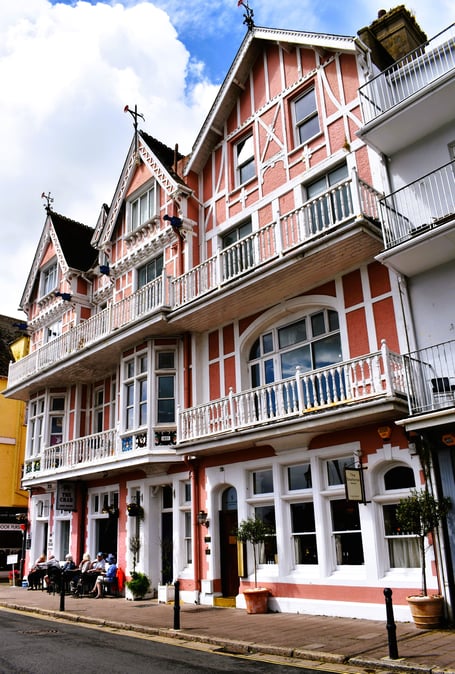
The elegant building situated on Dartmouth’s South Embankment may today be home to fine dining and lively conversation, but its origins tell a very different story.


During the 19th century, alcohol was widely associated with poverty, death, and moral decline. In response, millions of people across diverse social groups signed the “pledge”, joining the Temperance movement — England’s largest social reform campaign. What began as a social cause rapidly became an architectural presence, as the movement established its own network of alcohol-free hotels, coffee taverns, halls — even hospitals — to provide respectable alternatives to public drinking. By 1853, more than 300 Temperance halls existed across the country.
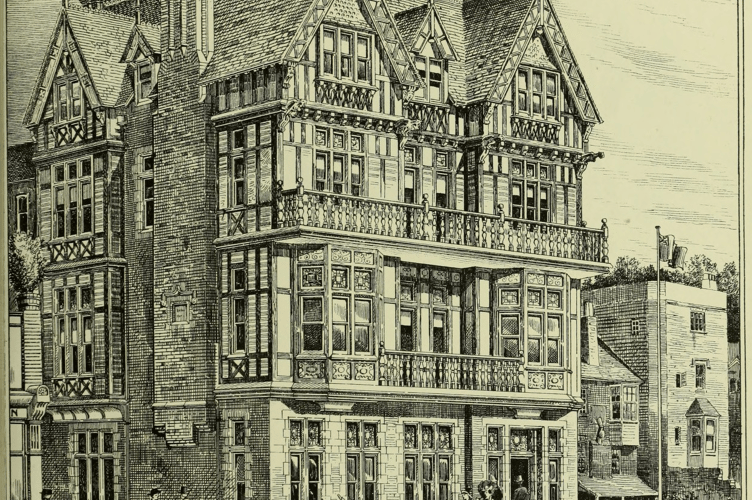
Dartmouth’s own contribution arrived in the late 1880s with the construction of the Raleigh Temperance Hotel. Now Grade II listed, the building remains a symbol of a campaign that reshaped Victorian life. Now home to The Crab public house, the award-winning Seahorse restaurant and private residences, an undoubtedly ‘spirited’ collection, its architecture began with that sober, reforming vision.
Much of its original character remains visible today, from the canted bays and paired French windows to the carved gargoyles and decorative gables featuring zig-zag patterns and wrought-iron flower finials.
This site has featured in a new publication by Historic England and Liverpool University Press: The Built Heritage of the Temperance Movement: ‘The Way Out of Darkest England’ by Andrew Davison. As the first comprehensive study of the movement’s architectural legacy, the book highlights how structures like the Raleigh form a significant layer of Britain’s built environment, documenting a time when architecture, social reform and public morality were closely intertwined in the fight against drink.
Comments
We've recently changed our login process. If you have an account for commenting, you will need to re-register on the login window.
This article has no comments yet. Be the first to leave a comment.