
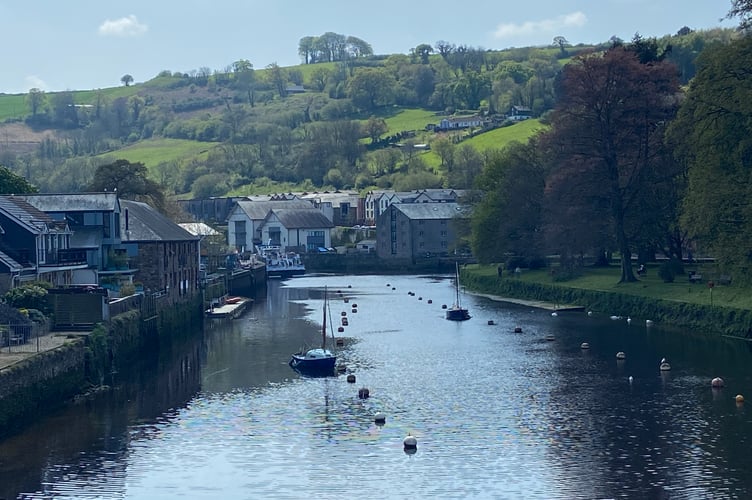
Over recent weeks, families across Dartington and Totnes have reported suffering severe vomiting and diarrhoea within 24 hours of swimming off the riverbanks.
At least one local primary school warned parents following a cluster of pupil absences, while South Devon MP Caroline Voaden confirmed she fell ill after swimming in the river.
When Voaden requested constituents share their experiences online, her post drew hundreds of responses describing near-identical symptoms.
According to community group Friends of the Dart, these reports align with patterns observed in local bacterial monitoring.
As the hot weather continues into the summer holidays, but testing and real-time outcomes clash, how can users tell if the water is safe?
So far this season, eight of the Environment Agency’s first 13 samples at Steamer Quay in Totnes exceeded 500 E. coli colonies per 100ml. Four of those readings surpassed 900 colonies per 100ml, scores that represent high risk to bathers.
By contrast, downstream samples at Stoke Gabriel have - so far - stayed below 150 colonies per 100ml.
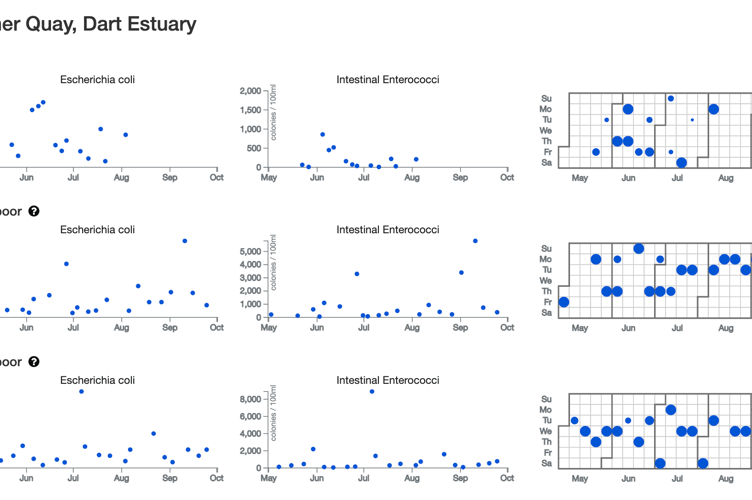
Official seasonal sampling by the Environment Agency runs strictly between May and September.
The agency can formally exclude samples taken while short-term pollution warning signs are active.


Standard testing also measures only two indicator bacteria, E. coli and intestinal enterococci, flagging sewage or manure while leaving agricultural fertilisers, pharmaceutical runoff, and toxic algae unmeasured.
In short, a river can clear the bacterial threshold while still carrying pollution no official body is measuring.
Hannah Pearson, Founding Director of Friends of the Dart, noted that the Dart carries some of the worst levels of pharmaceutical chemicals in the water.
However, she added that low river flow rates and increased human activity due to heat are likely responsible for the spike in reported sickness, rather than a fundamental shift in E. coli levels compared to previous years.
“Bathing locations aren’t limited to those exact spots, they are catchment areas,” Pearson warned.
South West Water said they were “sorry" to hear reports that people have been unwell.
They added that samples taken at Stoke Gabriel meet excellent standards, with no storm overflow spills recorded from their assets during this period, suggesting elevated results higher up the catchment stem from external sources.
However, critics highlight that standard guidance gives water companies scope to assess the severity of their own pollution incidents.
South Devon MP Caroline Voaden accused South West Water of "rewarding their unaccountable bosses" rather than fixing infrastructure.
She added: “Nearly a year ago, the government finally promised to bring our rogue water industry under control. We have seen precious little since then. It is not good enough."
While structural hurdles remain substantial, Pearson stressed that alongside acknowledging the problem, inspiring community action can drive meaningful change.
Official testing alone is not enough to determine whether a body of water is safe for bathing. There is even little solace in knowing that “patterns are consistent” with previous years when those patterns mean people are routinely getting sick in their local river.
What is changing, however, is the public’s patience.
Comments
This article has no comments yet. Be the first to leave a comment.