
A MERCHANT Navy veteran is hoping that medal reviews may mean he can accept a medal from Russia for his role in the Arctic convoys during the Second World War.
Brian Jenkins, who lives in Kingsbridge, was 16 when he joined the Merchant Navy as an apprentice.
Mr Jenkins is now 84 and Russia wants to honour sailors who took part in the Arctic convoys with the Ushakov Medal.
However, British rules mean they cannot currently accept them.

British wartime leader Winston Churchill once described the mission of Mr Jenkins and his colleagues as one involving the 'worst journey in the world'.
The Arctic convoys provided a lifeline to Russia but 100 ships were sunk and 3,000 sailors lost during the horrific journeys between the Britain and the northern coast of Scandinavia.
The journey was perilous as the convoys were in reach of the Luftwaffe, the aerial warfare branch of the Germans.
The Foreign and Commonwealth Office rules say British veterans may not accept a foreign medal if the act being recognised took place more than five years ago. The UK government has so far not recognised the survivors with a dedicated campaign medal of their own, which Mr Jenkins would like to see rectified.
David Cameron was asked at Prime Minister's Questions recently about a similar case and said a review would look at the general issue of medals, with the Arctic convoys 'probably the most pressing'.
Mr Jenkins said: 'They say that we have the Atlantic Star but you can get that for sailing from Bournemouth to the Isle of Wight! This was something completely different.'
He said he joined the Merchant Navy partly because he was afraid he would miss the war. Mr Jenkins said that when he received his first post, on the SS Fort Massac, the only information he was given was that it would be a cold journey.
On his first trip, SS Fort Massac was loaded with high explosives at Middlesbrough before heading out on the Russian convoy route.
Mr Jenkins said he remembers the joy at being posted to the western side of the convoy, furthest from the Nazis but, on reflection, was able to see that his ship was positioned there as, if it had been hit while travelling among the other ships, the whole convoy could have been blown up.
On the return leg of his first journey, the convoy was caught in the middle of a fierce storm and was scattered. They regrouped in the Faroe Islands and were there for three or four days.
Mr Jenkins said: 'Our next trip was to Murmansk and I can still remember the ship about 70 yards away from us getting torpedoed.'
Mr Jenkins said that one of the things he remembered the most was the cold. He said: 'The sea would wash over the bridge and would be solid ice once it hit the bridge. As we were carrying TNT, I remember thinking – we need parachutes not lifejackets!'
During the Arctic convoys, Mr Jenkins and his colleagues endured attacks by U-boats and aircraft dropping torpedoes.
Mr Jenkins attended the Remembrance service at the war memorial in Kingsbidge on Sunday and said it brought a tear to his eye.
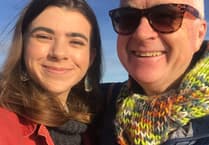
Mr Jenkins' daughter Ceri Jayes said: 'The lack of recognition from the UK government for the Arctic convoy sailors is dreadful.
'I am enormously proud of what Dad achieved and what he and his fellow sailors went through.'
Comments
This article has no comments yet. Be the first to leave a comment.