
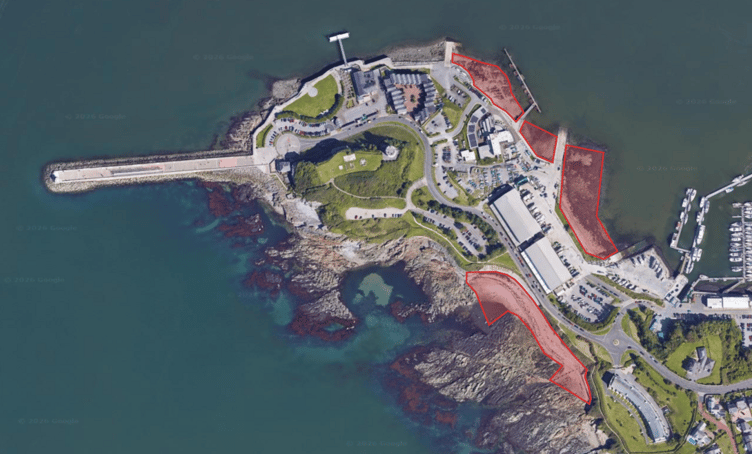
Access restrictions around Plymouth’s Mount Batten peninsula have been expanded after preliminary tests detected hazardous asbestos fibres across a wider stretch of the foreshore, local authority officials have confirmed.
Plymouth City Council initially closed Mount Batten Beach on July 10 following routine sand sampling that revealed high levels of asbestos fibres.
In a new update, the council confirmed that testing has now identified similar hazardous fibres on the sandy foreshore along the northern side of the peninsula, which is exposed at low tide.
Warning signs and safety barriers are being installed to keep the public away from affected areas.
Asbestos-containing materials have been collected from the beach every two months since 2019, when around 500kg of waste was cleared.
Previous assessments deemed the risk low because the material appeared mostly as solid pebbles or rocks washed in by the tide. However, recent analysis found asbestos fibres in 14 out of 16 sand samples.
Officials described the presence of free-floating microscopic fibres as a "new, and worrying, development", likely caused by the gradual physical breakdown of larger fragments over time.
Inhaled asbestos fibres present serious long-term health risks, including lung cancer and mesothelioma, though public health experts stressed there is no immediate risk of acute illness for recent visitors.
Despite the expanded land closures, air quality monitoring conducted around the peninsula has returned clear results, showing no evidence of airborne asbestos fibres.
According to Plymouth City Council, the origin of the material remains unknown.




Historical records show several structures were demolished on the peninsula in past decades, but a 2020 dive survey failed to pinpoint a definitive underwater source.
In a statement, a spokesperson for Plymouth City Council said: “Asbestos material was first identified on this beach in 2019, and since then we have been regularly collecting material from the beach that contains asbestos.
“From our risk assessment in 2020, the sand samples did not show asbestos fibres so the risk was considered low and the beach remained open with signs to warn beach users of the risks.”
Professor Steve Maddern, Plymouth’s Director of Public Health, acknowledged the frustration caused by the prolonged disruption during the peak summer holiday period.
"Closing a beach that is well used by local residents is the last thing we want to do... but the latest sand samples are concerning and we must prioritise the safety of the public," he said.
South West Devon MP Rebecca Smith previously voiced her disappointment at the closure, urging residents to respect safety cordons while pressing for regular progress reports.
The local authority confirmed that the closure could last several months while comprehensive environmental surveys are completed in partnership with the UK Health Security Agency (UKHSA).
The concrete slipways, pontoon, and the Mount Batten Watersports and Activity Centre remain fully operational and safe to use.
Water-based activities such as kayaking, paddleboarding, and sailing are unaffected, provided participants avoid walking on the restricted sandy foreshore.
Members of the public who suspect they have brought home contaminated rocks or debris from the area are advised to handle the items with care, clean surrounding surfaces with a wet cloth, and dispose of the materials at designated council facilities.
Anyone with health concerns should seek advice from their GP or contact NHS 111, and any concerned pet owners should consult a vet.
Comments
This article has no comments yet. Be the first to leave a comment.