
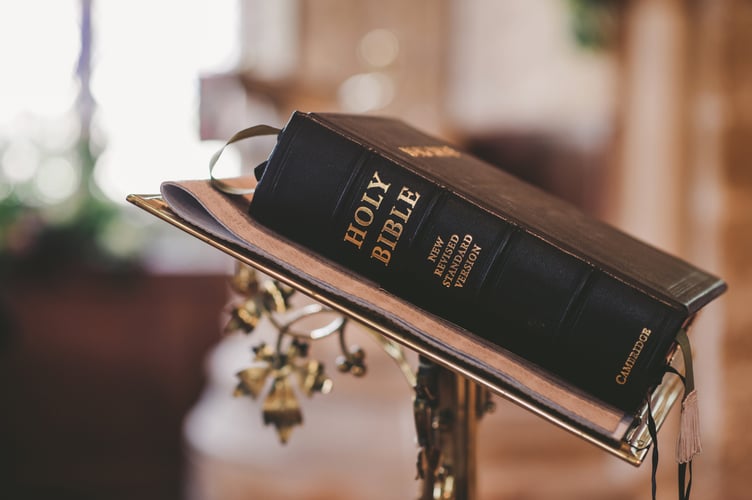
“If only these walls could talk.” Such words of whimsy are often heard among wandering visitors to places of historical interest. I share their curiosity, hoping that foundation stones might give us a clue, but mere stones still lack voices. The hope that some spirit in the stones might whisper deeper truths is pointless, because stones have no soul.
With Easter soon upon us, maybe the walls of Jerusalem could tell us more.
Riding into Jerusalem, Jesus heard the enthusiastic shouting from the crowd, many of whom hoped that he would be their long-awaited Messiah. But he also heard shouts of disapproval from the religious leaders, who hated the arrival of this blaspheming upstart.
“Tell them to stop,” they cried.

.jpeg?width=209&height=140&crop=209:145,smart&quality=75)


Jesus simply declared, “If these people kept silence, the very stones would cry out.” But the roads and walls said nothing.
Over the years, thousands of pilgrims had walked through those streets, yet the cobbles and the walls kept their stony silence. Why did the stones remain silent?
All things are possible with God, and it could have happened, but no further words were needed. Jesus had said it all. That timeless moment was a God-intervention and needed a voice of authority, a spiritual response, not just a rumbling among the stones.
God does not play dice. In the mystery of his methods, he is down to earth among men. “It pleases God by the foolishness of preaching to save them that believe” (1 Corinthians 1:21).
The prophet Isaiah assures us, “Behold, I have inscribed you on the palms of my hands; your walls are continually before me.” Walls may not talk, but they can be read.
Comments
We've recently changed our login process. If you have an account for commenting, you will need to re-register on the login window.
This article has no comments yet. Be the first to leave a comment.