
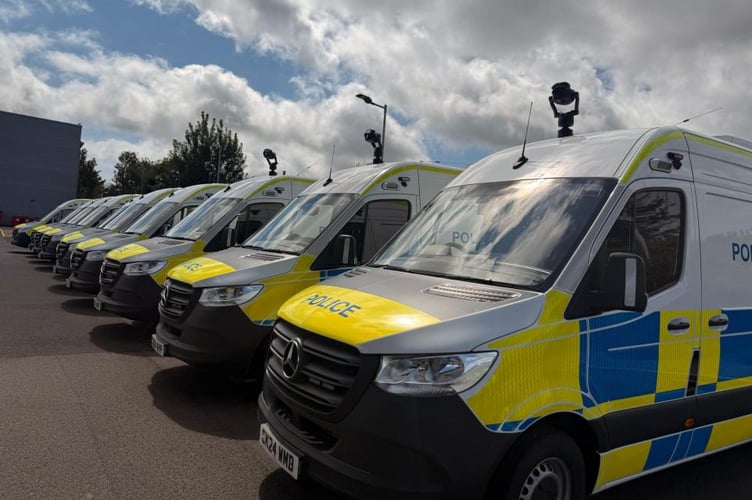
A new crime-fighting technology that has sparked debate over privacy and surveillance is being deployed in Devon for the first time this month.
Devon & Cornwall Police is introducing Live Facial Recognition (LFR) technology as a new tool to help officers protect communities and find wanted people.
The first deployment of the Force’s LFR van will take place this week, 6 to 8 August, in Newquay.
LFR works by comparing a live camera feed to a pre-determined watchlist. This could include people who are wanted by the police in connection with criminal investigations.
The technology captures measurements of a person’s facial features and compares this mathematical representation to the known faces on the watchlist.
The Force says that if you are not on the list, you cannot be matched. Images of people who are not on the watchlist are automatically and permanently deleted within seconds, and Devon & Cornwall Police do not retain the data. When the system suggests a possible match, trained officers on the ground will review it and decide whether to engage with the person.
Assistant Chief Constable Matt Longman said: “We want to make the best use of technology and LFR provides officers with an additional tool to help locate wanted people more quickly, prevent crime and keep communities safe.
“People may have concerns about Live Facial Recognition technology, so we are committed to being open about where we are using it, when it is used and the safeguards that are in place to ensure it is used transparently and proportionately.
“The van will be used across Devon and Cornwall to support policing operations. Members of the public will see a marked van and the area where it is operating will be clearly signposted so that people are aware of it. The human element is an important part of using LFR responsibly, so there will always be uniformed officers on the ground who will corroborate any possible matches before engaging with that person in an appropriate manner.”
Police and Crime Commissioner Alison Hernandez said: “The police need to use every tool available to find wanted criminals and take them off our streets. The use of live facial recognition has been tried and tested elsewhere, and I am pleased to see our communities here in Devon and Cornwall benefiting from this technology.”




However, the introduction of Live Facial Recognition has not been without controversy. Critics have raised concerns about the accuracy of the systems and their potential impact on civil liberties.
Previous studies have also identified concerns over racial and gender bias in facial recognition technology, with critics warning that inaccurate matches could risk reinforcing existing inequalities in policing. Devon & Cornwall Police says advances in the technology have reduced these issues and that the national algorithm it will use shows no statistical bias in testing.
The force says officers will also receive briefings before deployments on potential disparities linked to colour, age and gender, with additional checks required before any action is taken.
The Force says all deployments will be published on the Force website with a minimum of seven days’ notice.
Visit the Devon & Cornwall Police website for frequently asked questions and more information about Live Facial Recognition: Live Facial Recognition | Devon & Cornwall Police
Comments
This article has no comments yet. Be the first to leave a comment.