
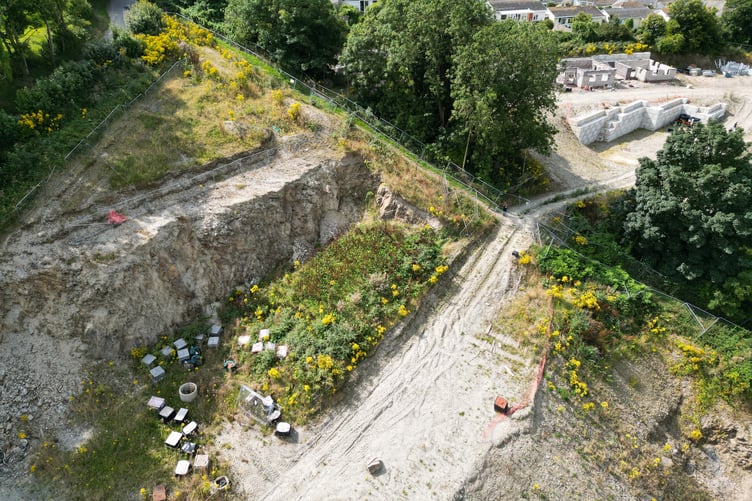
A property developer and his company have lost an appeal against more than £296,000 in fines and prosecution costs imposed over breaches of planning notices relating to a 32-home development in Kingsbridge.
The Court of Appeal dismissed appeals brought by John Freeland and Garden Mill Ltd, after they argued they were unable to meet the financial penalties imposed at Bristol Crown Court in August 2024.
Garden Mill Ltd was ordered to pay £140,000, comprising a £100,000 fine and £40,000 in prosecution costs. Mr Freeland was ordered to pay £156,000, made up of a £76,000 fine and £80,000 in costs.
The penalties followed guilty pleas to breaches of a Temporary Stop Notice, two Stop Notices and two Enforcement Notices imposed in connection with the Locks Hill site.
According to the judgment, outline planning permission for the development of 32 homes had been granted by South Hams District Council in 2017 to an unrelated company.
The site was bought by Garden Mill Ltd for £720,000 in early April 2021, with site clearance and preparatory development work beginning almost immediately.
The Court of Appeal heard the company continued development work for around six months between May and October 2021, in deliberate breach of planning conditions and the notices issued by the council.
Mr Freeland, who was a director of the company, was closely involved with arranging the work and communicating with council representatives and contractors.
The judgment said he carried out the work in full knowledge of the breaches and in what the court described as "open defiance" of interventions by police and council officers.
An email sent by Mr Freeland to building contractors on May 16, 2021, said he intended to ignore a Temporary Stop Notice and a tree preservation order.




The court heard he described it as "business as usual" and referred to "the gloves coming off". He also signed off with the SAS emblem, saying: "Who dares wins, as it won't be them."
One estimate put the value of the developed site at £21 million, while another projection anticipated that each of the 32 properties would sell for more than £500,000.
At the original sentencing hearing, Mr Freeland and the company had been ordered to provide financial information by August 2, 2024, ahead of sentencing on August 19.
However, the Court of Appeal heard that neither provided the required information by the deadline or before the sentencing hearing.
Mr Freeland eventually produced a two-page Metro Bank statement and purported company accounts on the morning of the hearing.
The Court of Appeal described the documents as inadequate. The personal bank statement was redacted and incomplete, while the company accounts were unsigned, unaudited and heavily redacted.
The judges said there was no credible evidence before the sentencing judge to establish that either Mr Freeland or the company could not afford the penalties.
Further financial information was produced during the appeal, including evidence that administrative receivers had later been appointed over the company's assets and that Mr Freeland had subsequently been made bankrupt.
However, the Court refused to admit the material as fresh evidence.
The judges said much of the information had been available to the appellants at the time of sentencing and that a conscious decision had been made not to provide further financial information despite the opportunity to do so.
The Court also raised questions about unexplained transactions and missing bank statements in the later financial material.
It concluded that the original judge was entitled to proceed on the basis that Mr Freeland and Garden Mill Ltd had the financial means to pay the penalties.
The appeals were therefore dismissed.
Comments
This article has no comments yet. Be the first to leave a comment.