
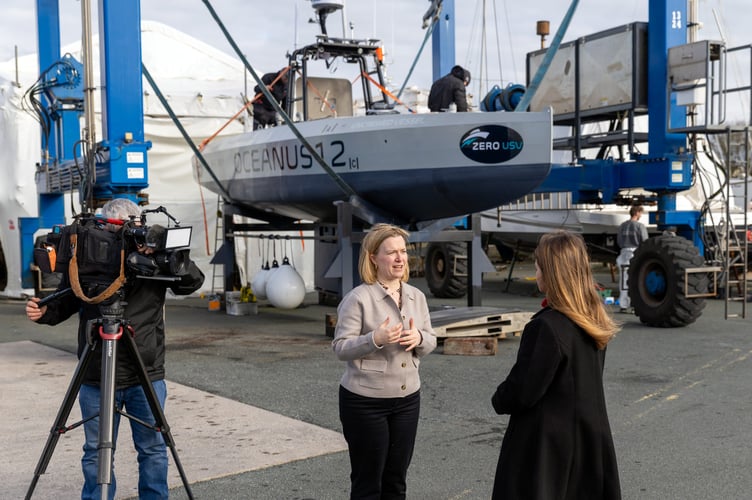
South West Devon is well placed to play a central role in Britain’s defence future. It is home to 42 Commando Royal Marines, the Plymouth and South Devon Freeport, and a growing network of defence and technology firms. Turnchapel Wharf hosts the Plymouth National Centre for Marine Autonomy, while nearby HMNB Devonport is key to maintaining and upgrading the UK’s nuclear deterrent.
Local SMEs such as GMD Eurotool, Bluestone Technology and DTM Global Procurement are already contributing to this ecosystem. Many more businesses are looking to invest, encouraged by the ambitions set out in the Strategic Defence Review: regional clusters, a hybrid navy and expanded use of autonomous systems.
But progress has stalled.
The Strategic Defence Review and the Defence Industrial Strategy both outlined a clear direction—stronger exports, new technologies and a leading role for places like Plymouth. However, without the Defence Investment Plan which outlines the MOD’s spending plans, these ambitions will remain just that, ambitions. The Prime Minister’s reckless spending on welfare to appease his backbenchers, totalling £334bn in 2025/26, has been at the expense of our defence with the Chancellor’s Treasury officials reportedly blocking the DIP.




On Tuesday, 24th March, I delivered a speech in the House of Commons which set out why the delay to the Defence Investment Plan is deeply harmful for defence SMEs in South West Devon and, consequently, damaging for our national security.
For defence startups, lacking the deep reserves of primes like Babcock and often operating month to month, this uncertainty is perilous. They need contracts, timelines and investment decisions. Instead, Labour’s delays are creating hesitation. These firms which are vital for spurring competition and driving innovation will begin to turn their heads and look overseas for opportunities, particularly in rapidly evolving sectors such as marine autonomy.
Outdated regulation in our age of autonomy is another barrier I highlighted in my speech and have been working hard for several months to unblock. While a marine autonomy startup in Canada can secure approval to test its vessels in as little as six weeks, the same company attempting trials in Plymouth Sound faces an overwhelming burden of paperwork. Promised reforms, including regulatory “sandbox” arrangements outlined in the SDR by April 2026, appear no closer to materialising.
Plymouth and the surrounding area have the potential to become a world leader in marine autonomy, strengthening our proud support for the Royal Navy for generations to come. However, if the Labour Government continues to drag its heels, this opportunity will be lost—along with the jobs, investment, and innovation it would bring to our area.
Labour ministers pledged that the Defence Investment Plan would be published last autumn; now, in spring, it still has not appeared. Our enemies will not wait for the MOD and Treasury to sue for peace before attacking. The decision now rests on Starmer’s desk—what is needed is clear political leadership.
Comments
We've recently changed our login process. If you have an account for commenting, you will need to re-register on the login window.
This article has no comments yet. Be the first to leave a comment.