
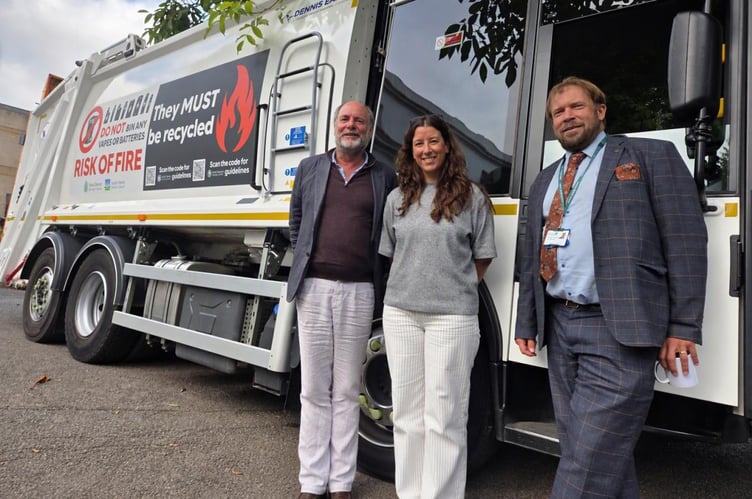
South Hams District Council is considering switching its waste and recycling fleet from diesel to an alternative fuel after a trial found it could significantly cut vehicle emissions.
The council tested hydrotreated vegetable oil (HVO) in four collection vehicles and reported emissions reductions of between 79% and 89%.
It said the fuel caused no compatibility or reliability problems and did not require vehicles to be modified.
If adopted across the entire waste fleet, the council predicts HVO - also known as green diesel - could reduce annual emissions by an estimated 1,210 tonnes of carbon dioxide equivalent.
This figure would equate to an 81% reduction for the fleet and a 61% cut in the council’s overall emissions, based on 2025/26 fuel use.
The council is considering extending the trial at its Ivybridge and Torr Quarry depots for another six months to assess costs, performance and sustainability before deciding whether to expand its use.
The council is considering HVO as a short- to medium-term alternative for larger collection vehicles, where electric options are not yet practical.
However, the council has said switching to electric vehicles remains its long-term priority for smaller vans and light commercial vehicles, with 15 diesel vans already replaced by electric models.
Any future procurement would require recognised sustainability certification and checks on where the fuel comes from.
The trial is part of a wider programme to reduce emissions from council operations, including investment in solar power at leisure centres.


At Quayside Leisure Centre in Kingsbridge, 310 solar panels are expected to generate about 186 megawatt hours of electricity annually – roughly half the centre’s electricity use – saving an estimated 36.1 tonnes of carbon emissions a year.
The council has also committed to installing solar panels at its leisure centres in Ivybridge, Dartmouth and Totnes, with the planned installations expected to save a further 90 tonnes of emissions annually, while reducing energy bills.
Other measures include solar panels and additional insulation at Follaton House, the council’s headquarters, electric vehicle charging points and plans to install more energy-efficient LED lighting in council car parks.
Cllr Nadine Dommett, the council’s Executive Lead for Decarbonisation of Council Operations, said the HVO trial offered an opportunity to cut emissions while the council worked towards longer-term alternatives.
“The results of the HVO trial are extremely encouraging,” she said. “They show that we can make a significant and immediate reduction in emissions from our larger collection vehicles while we continue working towards longer-term, zero-emission alternatives.
She said the solar projects would also help leisure centres generate their own electricity and reduce running costs.
“There is no single solution to reducing our carbon footprint. It requires a range of carefully considered steps, from renewable energy and more efficient buildings to cleaner vehicles and better use of fuel. Together, these projects show the positive progress we are making towards a cleaner, greener and more resilient South Hams.”
According to the council, any future procurement would require recognised sustainability certification and checks on the fuel’s source.
The Council would also continue to review emerging evidence, regulation and new technology to make sure that its approach remains responsible, transparent and effective.
Comments
We've recently changed our login process. If you have an account for commenting, you will need to re-register on the login window.
This article has no comments yet. Be the first to leave a comment.