

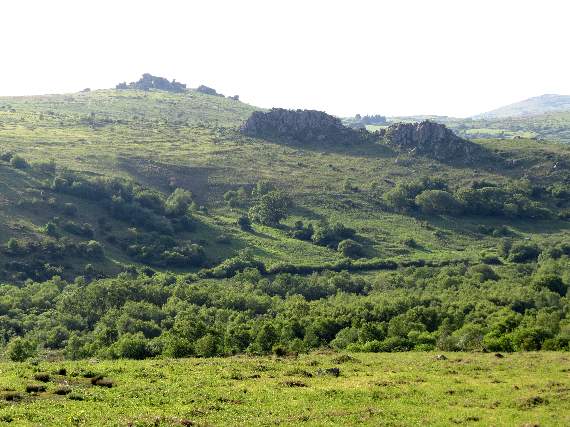
A CHARITY based in South Brent says it wants to see ‘a big increase’ in the amount of woodland on Dartmoor.
Conservation charity Moor Trees, which is headquartered at the Old School Centre in the village, has been planting native trees on and around Dartmoor for 15 years with the help of volunteers.
The charity has now launched a campaign to encourage a significant increase in the amount of woodland cover on the moor.
It stresses, though, that the ‘cherished’ open landscape with its far-reaching views would be retained, with woodland ‘working up’ from existing areas in valleys.
.png?width=209&height=140&crop=209:145,smart&quality=75)

In a report published last week, Moor Trees points out that Dartmoor, beautiful as it is, would naturally be much more heavily wooded. Only fragments of the forest that once covered the moor still remain.
Its vision is to restore some of the lost forests of Dartmoor by creating new woodlands, and supporting their creation by individuals and communities. Moor Trees argues that doing so would offer significant environmental benefits in terms of increased biodiversity, and new livelihood opportunities.
It notes that tree cover is already naturally extending in some areas.
In the report, Moor Trees advocates the concept of a ‘wild heart of Dartmoor’ within the national park in the long term, one that coexists with farming, archaeology and recreation.
However, the charity’s director Graham Burton said, he was not convinced more radical ideas - including reintroducing native wildlife such as wolves, bears and elks - would be suitable on Dartmoor.
Moor Trees wants to engage communities on and around Dartmoor, and discuss how to bring ‘wildlife rich, amenity-friendly’ native woodlands within the reach of every parish and hamlet.
Mr Burton said it was not the intention to plant trees right across Dartmoor. The publication of the report aimed to give people an idea of what might be possible, and the benefits that increasing woodland might bring.
He also raised the possibility of some form of payment for low-impact farmers on the moor, who would work in ways that promote increased woodland cover.
Mr Burton said: ‘The rural economy is transforming; climate change and reforms in the way that the government supports the uplands mean we are at a crossroads.
‘We believe that large areas of the moor would benefit from being shaped by more natural processes, accompanied by low density grazing. We want to work with landowners, tenants and communities to identify suitable areas for the creation of new woodland, including natural regeneration.
‘We know that this can only happen on a large scale by embracing the concept of payment for ecosystem services provided by low impact farming.’
While Dartmoor National Park Authority said that it would not comment on Moor Trees’ vision at this stage, its current management plan published in 2014 says it wants to encourage ‘opportunities for new woodlands’.
Copies of the report are available from Moor Trees by emailing [email protected], or on the website: www.moortrees.org.
Comments
This article has no comments yet. Be the first to leave a comment.