
Over the summer bird watchers in the South Hams have a lean time.
Many birds leave for breeding sites elsewhere, for example greenshanks leave our estuary to nest mostly in northern Europe, with a few choosing Scotland.
Small birds which do nest here sing less often and from less prominent perches, so we see them infrequently.
They avoid drawing attention to nesting sites for obvious reasons.
-with-cast-members-of-Glitch.png?width=209&height=140&crop=209:145,smart&quality=75)

.jpg?width=209&height=140&crop=209:145,smart&quality=75)
Then, when they have raised their broods, the adult birds go through a period of recovery from all the hard work.
They moult their bright feathers and replace them with "eclipse" plumage which attracts less attention.
For a time, many of us stop looking for birds altogether.
By late summer, say August into September, things slowly start to pick up.
Rob Macklin monitors numbers of birds on National Trust land at Soar and Southdown Farm near Malborough.
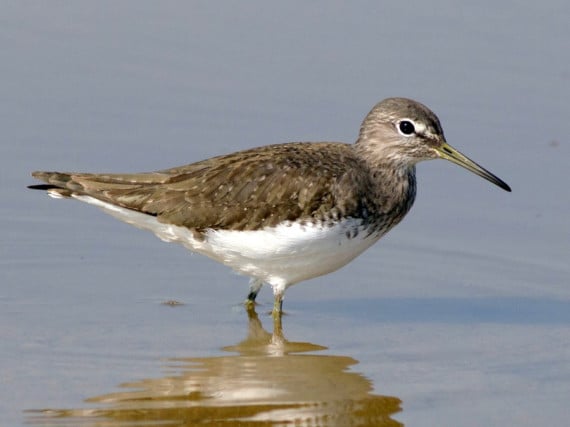
On August 23 he reported seeing green sandpipers, ringed plover, golden plover and snipe on farmland and around some newly created ponds.
Green sandpipers, a good tick for birders, breed in northern Scandinavia and Finland.
When they have raised their young, they set off on migration to warmer parts, typically around the Mediterranean.
The South Hams is a good stopping-off point, where they can refuel and take a break before journeying on.
The other waders he saw also mostly breed far to the north, with only relatively small numbers nesting here.
Golden plovers later appear on the Kingsbridge estuary, with as many as 800 or more boosting our winter counts.
Small birds also turn up on fields locally.
I admire the elegant wheatears which can number hundreds on our local stubble fields, and slim yellow wagtails which seem to like the mown grass at East Soar farm.
The wagtails, with their greenish heads and yellow underparts, like to forage for insects disturbed by livestock, a habit which explains the French name "little shepherdess".
Nearly all the wheatears leave our shores to winter in Africa, and most of the wagtails do too.
There is a general churn of birds, with a mix of home-bred birds mixed in with much larger numbers of migrants, which will only drop in for a short time.
Now and again some real rarities turn up. Rob also saw a Wryneck, which is a small relative of the woodpeckers, coloured in subtle greys and browns and tricky to see when it hides in bushes.
A few used to nest in the UK, but now they only visit on migration.
He also reported seeing both Icterine and Melodious warblers around Soar.
Both species are rare visitors from southern Europe and are small grey/brown birds like our chiffchaffs and well beyond my skills to identify, so the records are a credit to Rob’s expertise.
Now, things are hotting up again for us birdwatchers, as it has done in this season for many years.
I am an avid reader of old Guardian Country Diaries and think a quote from one contributor, Arnold Boyd, when duty called him away from home in 1939, captures the mood:
"I cannot help thinking that if only Hitler had been an ornithologist, he would have put off the war until the autumn migration was over".
Comments
This article has no comments yet. Be the first to leave a comment.