
Autumn is a season of considerable change. The team of nature diarists tries to reflect the seasons and to record change. September 2021, the month of the autumn equinox, has been eventful. This month’s diaries began with Dennis Elphick’s graphic accounts of the behaviour of birds that call in to the national nature reserve at Slapton Ley. Here, reed beds offer shelter. The availability of specialist food supplies attracts migratory species such as Swifts, Swallows, Sedge Warbler and Reed Warbler. Unusual birds also arrive. As this week’s diary was in progress, I walked along Slapton Line with a friend and saw a Snow Bunting, on the shingle ridge, searching for seeds. A nomadic bird, travelling long distances from Iceland and Scandinavia, this Bunting is a rarity in the south west.
Meantime, there are resident birds which are equally attractive. They also like to eat seeds.
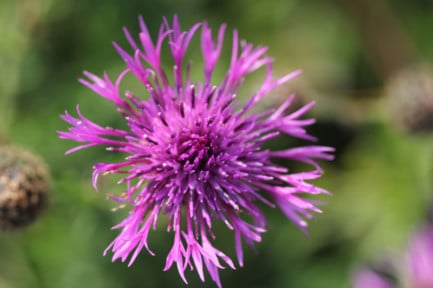
The founder of the nature diaries, Gordon Waterhouse, was about to cut down the colony of Knapweed which he had safeguarded in his garden, when he realised that some twenty Goldfinches were feeding from the plants’ seed heads. The food source was saved!
Now, I write in the last days of September 2021. It has been an unusually warm, dry, month. High pressure, with barely any breeze and with spectral misty-moonlit nights, has prevailed. The predominant colour of Slapton’s ley-side path has become brown. There are sculptural seed heads of long-dead umbellifers, particularly wild carrot (Daucus carota). There are the remains of sea radish (Raphanus raphanistrum ssp maritima) which, in its abundance last year, threatened to take over. There is Hogweed (Heracleum sphondylium), a coarse plant, notable more for its size and stature than its botanical eloquence.


.jpeg?width=209&height=140&crop=209:145,smart&quality=75)
Amongst these graded browns and beiges, colour stands out, particularly that of Common Toadflax (Linaria vulgaris). Why is it noticeable? For a start, it is bright yellow, with attractive orange bulges, known as bosses, which protect and close the flower head. Secondly, at Slapton, storm events in recent years, with the overthrow of high tidal water, have enabled the plant’s seed spread into the growth of large pools of colour along the leyside path.
This is a flower which has evolved sophisticated strategies. Also known in the vernacular as "Butter and Eggs" the flower uses its psychedelic colour scheme to attract late autumn insects. What else might attract insects? Well, food, of course. But, hey! How do you find food within the complicated structure of a toadflax flower? First, find your landing ground. Toadflax flowers point skywards: the optimum angle for insect attraction. Each flower has a lip - a convenient landing ground. When it lands, the weight of the insect, particularly bees, opens the flower.
Here’s where the flower has added attractions. It has a long, stylish, tube, known as a spur. This spur conceals secretions of liquid sugary nectar - a "reward" for the insect’s endeavour. In collecting nectar, the insect also brushes against the flower’s store of pollen. A transfer of pollen from one plant to another aids fertilisation and the creation of new seed.
Of course, predators are involved - insects which have evaded the flower’s original pollinating byways and have learnt the quick-release skill of accessing nectar. In the case of Common Toadflax, the insect predators snip through the spur at the base of the flower. Have a look at some Toadflax flowers: you may see that the spur has been damaged. A small hole evinces the raiding of a nectar store.
My contribution to mark the equinoctial changes of September is thus a motley collection of observations, both from the South Hams, and for the autumn equinox. It reflects a range of skills on the part of the observers. Above all, it is an important record of personal interests and the desire to note natural phenomena.
Comments
This article has no comments yet. Be the first to leave a comment.