
SOLAR farms, wind turbines, planning policy and employment were among the concerns covered at the South Hams Society's 'any questions' evening.
The distinguished panel was governed by Jonathan Dimbleby, president of the South Hams Society and the chairman, John Chalmers. The panel featured: Gary Streeter, MP for South West Devon; Professor Ian Mercer CBE, president of the Devonshire Association and the Devon Wildlife Trust; Paul Cottington, SW NFU environment adviser, and Chris Murray of Pennywell Farm, which recently won the gold award for green tourism.
Concerns raised from the floor included growing villages potentially losing their character, that affordable housing was not affordable to locals, and that covenants must stop affordable houses becoming holiday homes.
The panel also considered that more thoughtful planning could minimise the impact of development.

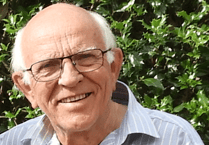


At 7pm on Tuesday, April 9, in the Kings Arms, Kingsbridge, around 100 people came to watch and participate at South Hams Society's 'any questions' evening.
The questions began with Robin Hogg from the campaign to protect rural England asking panel members to identify the main threats to the AONB.
The panel answered that housing was needed for population growth and for locals who cannot afford house prices. It was suggested that, since the new national planning policy framework emphasised development, councils were nervous about rejecting applications which would then be appealed and allowed. Chris Murray asserted the local authority has a 50/50 chance of success on appeal. Gary Streeter confirmed that robustness of the local plan is the crux.
The next questioner asked whether the boundary of the AONB should be extended to Dartmoor, protecting the watercourses and providing a wildlife corridor. Ian Mercer confirmed that rivers are always good corridors. Jonathan asked how such an irregular AONB boundary was drawn up. The panel thought that extending the AONB to cover the whole district would meet with opposition.
The following question was received with great interest: 'What should be the planning policy for wind turbines and solar farms in the AONB?'
The general opinion was that small wind turbines and groups of solar panels for local use were acceptable, but large commercial installations should not be permitted because of their enormous visual impact.
The effect of modern farming methods on the AONB was the next question. Paul Cottington said the farming methods had to change; new buildings were required to improve the welfare of animals and there were new regulations on pollution. Sympathetic planning, maintained Chris Murray, was the way to protect the AONB.
Helen Kummer asked the panel to make suggestions for high quality employment in the area, without disfiguring the landscape. Gary Streeter expressed the view that fast Broadband could be a key tool for rural employment. The rapid growth of quality food concerns, in the South West, was suggested from the floor.
The last questioner asked whether redesignation of our AONB as a National Park would better protect our beautiful landscape. The panel considered that it might attract more walkers, which would damage farms. Ian Mercer made the counter suggestion that the AONB should have its own planning authority with representative members.
Comments
This article has no comments yet. Be the first to leave a comment.