
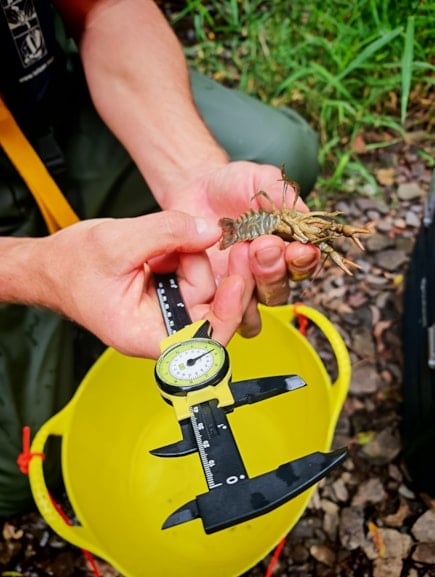
One of Britain’s most endangered freshwater species is being protected thanks to the Saving Devon Native Crayfish project, led by Wildwood Trust with support from South West Water.
The water company is working with Wildwood Trust's Crayfish Conservation Team to help rescue white-clawed crayfish from vulnerable wild populations and breeding them at their dedicated hatchery in Devon.
Wildwood has successfully hatched more than 1,500 juveniles from rescued wild caught crayfish, providing a vital source for future conservation releases.
The project is helping to protect the white-clawed crayfish from threats like poor water quality, habitat loss, and the American red signal crayfish, which is an invasive non-native species that poses significant ecological threats to native wildlife and waterways.
The project is part of the partnership’s wider efforts to protect endangered species from invasive species, led by Wildwood Trust with support from South West Water, the National Lottery Heritage Fund, Devon Wildlife Trust, the Environment Agency, and Natural England.
Marcus Brown, Invasives Training and Awareness Officer for South West Water, said: “We are committed to protecting wildlife from invasive non-native species and are proud to support the important work being done by the Saving Devon’s Native Crayfish Project to conserve white-clawed crayfish and help safeguard the future of this endangered native species.
“White-Clawed Crayfish are hanging on in just a handful of places, so every remaining population is incredibly important.”
Charlotte Mead, Conservation Manager at Wildwood Trust added: “By rescuing animals from vulnerable sites, breeding them and establishing new populations in safe waters, we’re giving the species the best chance of a future in Devon.




“Projects like this are so successful because of the strength of knowledge and skills we share. The support from South West Water, alongside our other partners, is helping us continue that work and protect one of Britain’s rarest native freshwater species.”
Comments
This article has no comments yet. Be the first to leave a comment.