
DEVON’S residents have been “betrayed” in a fundamental overhaul of how councils will be reorganised and which services they will be responsible for, it has been claimed.
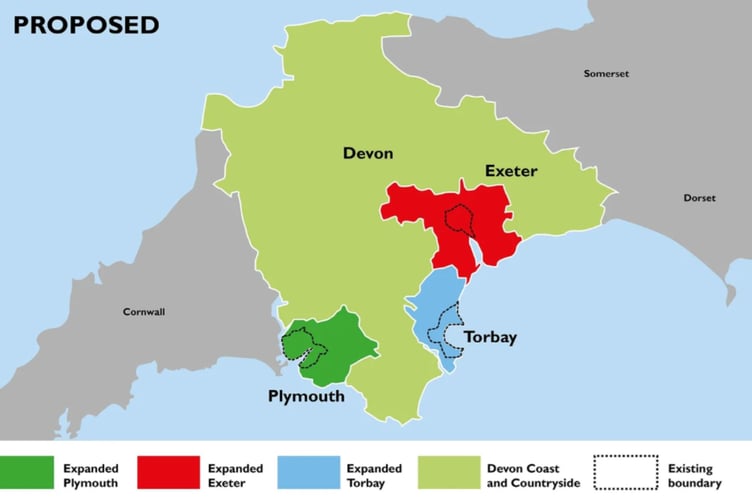
The government has confirmed its local government reorganisation plans for Devon, which will see four new councils created in the place of its current 11.
Those changes will see Plymouth City Council subsume parts of some of the South Hams, while Exeter has been granted permission to swallow up parts of Teignbridge District Council, as well as East Devon and Mid Devon district councils.
Steve Reed MP, the secretary of state for housing, communities and local government, told the House of Commons the changes would bring decision-making closer to communities, and that the move to unitary councils would be easier for residents to understand.
He added that altered boundaries for the new councils would better reflect how populations live and work in those areas, and that his proposals would ensure places like Plymouth and Exeter meet their growth potentials.
Councillor Julian Brazil, the Liberal Democrat leader of Devon County Council, believed the outcome was “shocking” and expressed incredulity that Devon’s two Labour councils had been given permission to take the best parts of their neighbours to create new councils.
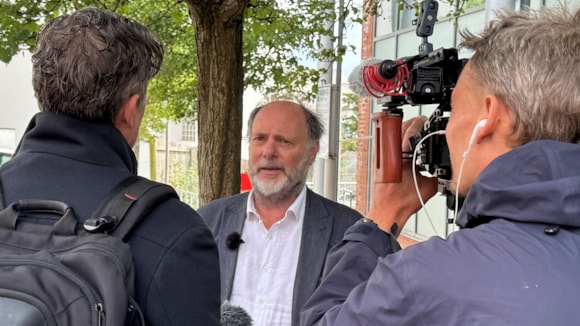
“It is shocking and Devon has been betrayed,” he said.
“The government has said it looked at all the proposals but that the Secretary of State has gone with the one suggested by Exeter and Plymouth.”
He added: “I wonder what [those councils] have in common with the government,” pointing to the fact both cities are run by Labour administrations, the same party in power at Westminster.




Exeter’s Labour MP, Steve Race, said it had been “increasingly unsustainable for Exeter to remain a poorly funded district council, with most spending decisions taken by Devon County Council”.

“Creating a unitary authority for Exeter will secure local democracy, provide the opportunity to improve local services, and create sustainable economic and jobs growth,” he said.
“Under a new unitary authority on boundaries that include Exeter’s wider economic footprint, Exeter will be better placed to unlock new opportunities for jobs, housing, innovation, and investment, while ensuring we advocate for the transport and infrastructure we need as more people choose to call our city their home and their workplace.”
Mr Race added it would bring decision-making closer to communities rather than the confusion of the current two-tier system.
“It will also finally give those people living in the surrounding area, who already work and socialise in Exeter, a say in the way our city is run,” Cllr Race added.
Councillor David Wulff, the Liberal Democrat leader of Mid Devon District Council, called the changes a “political city land-grab”, claiming it would create a “two-class Devon”.

“I am deeply disappointed that the government has squandered a genuine opportunity to deliver meaningful reform of Devon’s councils, strengthen local accountability and bring decisions closer to the residents and communities they affect,” he said.
“Instead, it has chosen a remote, centralising model that weakens local identity and leaves rural communities with less influence over their own future.
“The government claims that this exercise is about removing two-tier local government. In reality, it is creating two classes of council: enlarged city authorities handed additional population, development land and tax base, and a sprawling rural authority left to provide more expensive services across the remainder of Devon.”
He added Crediton was a “proud and historic Devon market town”, noting that “it is not an Exeter suburb, and it should not be treated as a balance-sheet asset to be transferred to City Hall”.
“Rural Devon is not a piggy bank to be raided whenever an urban authority needs more taxpayers, more land or a stronger financial base” Cllr Wulff said.
“Yet that is what this decision appears to do. Westminster and the city halls are asking rural communities to surrender their taxes and shoulder the financial risk of a reorganisation designed around the needs of expanded urban authorities.”
In Parliament, Steve Reed MP, the secretary of state for housing, communities and local government, said the changes were the “most ambitious” overhaul of local government undertaken, and that the aim was to “devolve power out of Whitehall”.
“Devolution is about strong local councils delivering good public services and supporting economic growth while being closely connected to the communities they serve,” he told the House of Commons.
“The current two-tier system of local government is confusing, it slows down decision-making and blurs accountability.
“In many areas, the existing boundaries don’t match the services provided or public identities of those areas.”
He confirmed the proposal to change Devon’s make-up into four new unitary councils, with an expanded Plymouth, an amplified Exeter, bigger Torbay, and the rest creating a so-called ‘coast and country’ unitary.
He name-checked Plymouth as a city of “nationally significant growth location”, suggesting the changes could help fulfil its potential in areas such as housebuilding.
Mr Reed also named Exeter as a beneficiary of his proposals, once again stating it would help the city grow and enable the government to “get the homes built that we need”.
Mr Reed stated areas undergoing local government reorganisation will receive more than £1 million per new unitary created to support the changes.
His opposite number, James Cleverly MP, the Conservative shadow secretary, claimed the rationale for the changes was “blatant” and that they had been “driven by party politics”.
He highlighted the changes in Devon as those “put forward by Labour in Exeter and Plymouth”.
“Many communities will be left in limbo while Labour councils have been allowed to redraw the map ahead of future elections they will be engaged in,” he said.
“If the Secretary of State wanted to avoid accusations of gerrymandering, then why create such a gerrymandering set of boundaries?”
Mr Cleverly asked Mr Reed if any analysis had been conducted on the potential for judicial reviews.
Cllr Brazil said the costs of a judicial review paled into insignificance compared to the amount of money to enact the overhaul.
“I’m almost certainly minded to judicial review this,” he said.
“I think we have to, I think the people of Devon need us to.
“When you look at the costs of local government reorganisation for Devon possibly hitting £80 million versus the £250,000-£500,000 cost of a judicial review, the latter would be money well spent.”
The changes, which need to be approved by Parliament, will see the two-tier system in Devon eradicated.
That will mean that instead of the district and county council system that exists in much of Devon now – where different services are overseen by different councils – bigger unitary councils will be created.
Unitary councils are responsible for all the services within their boundaries, such as happens within Plymouth and Torbay now.
Under the changes confirmed by Parliament, Plymouth will subsume 13 parishes currently in the South Hams, while Exeter will get 15 from Teignbridge, 28 from East Devon and six from Mid Devon as part of a new expanded council, while Torbay will expand its boundary to take on 22 parishes in total from Teignbridge District Council and South Hams.
The remaining bits of the county – predominantly the northern and mid areas, will be pushed together into a so-called coast and country unitary.
Comments
We've recently changed our login process. If you have an account for commenting, you will need to re-register on the login window.
This article has no comments yet. Be the first to leave a comment.