

A gang of professional burglars have been jailed for a total of 21 years after a Judge heard they left a trail of misery across the South Hams.
The three men targeted the homes of empty homes of pensioners who were away on holiday and looted £100,000 worth of jewellery in 39 raids.
They were trapped because they used a TomTom satnav to plan their trips to Devon and Sussex, which enabled detectives to link their movements to the burglaries.
Among the homes they burgled in October 2014 were two in Mount Boone Way, Dartmouth, where cash and jewellery was stolen; and one in Redwalls Meadow, Dartmouth, where no property was stolen.



.jpeg?width=209&height=140&crop=209:145,smart&quality=75)
Other homes in the South Hams burgled during the same month included one in Butts Park, Stokenham, where no property stolen; and homes in Robins Field and Green Park Court, both Chillington.
The gang were all Lithuanians who had moved to East London to work in the building trade but turned to crime. They burgled 23 homes in Devon and 16 in Sussex.
Two of them had previously served jail sentences in Germany for a robbery in Dusseldorf and they all had criminal records in this country.
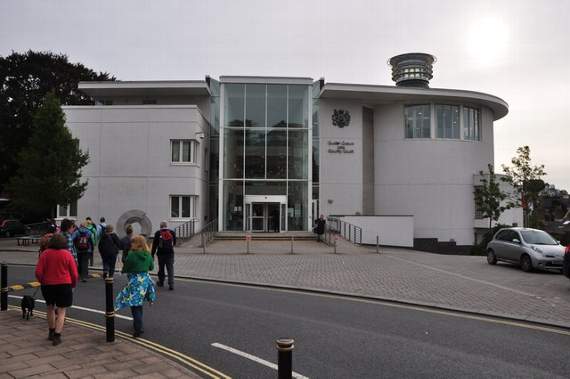
They received severe sentences after a judge at Exeter Crown Court was read heart-rending statements from the victims of the raids telling how their lives had been blighted.
Many of the victims were elderly and most lost jewellery which had been handed down through their families for generations and which they planned to pass on to their grandchildren.
One Chillington home owner rushed back from holiday because her mother had died only to find that her home had been burgled.
Another victim lost a gold watch which he had given to his wife as a wedding present.
The gang operated for eight months until their arrest in March 2015 and police are still investigating around 100 more cases where the same method of entry was used.
Dainius Gastilavicius, 39, of Worcester Road, East London; Arturas Malysovas, 21, of South Esk Road, London; and Tomas Paulavicius, 36, of Raydons Road, Dagenham, all denied conspiracy to burgle. All three chose not to give evidence and they were found guilty in less than hour by a jury who had spent a week listening to evidence.
Satnav, DNA, phone and number plate recognition evidence built up an exact picture of their movements and a iPad stolen in Devon was traced to Lithuania, where it was being used by one of their associates.
Gastilavicius was jailed for seven years, Malysovas for six years, and Paulavicius for eight years by Recorder Mr James Waddington.
He told them: ‘Your crimes were professionally planned and carried out and involved to travelling to various areas by car and targeting homes you believed to be unoccupied.
‘I have heard 22 victim impact statements which refer to items of jewellery of great sentimental value. Their loss has caused anxiety and feelings that the losers no longer feel safe in their own homes.
‘They all feel violated. You have been brought to justice by a thoroughly professional and painstaking police operation by the police in Devon and Somerset and Sussex.
‘The full facts make it clear these offences are much more serious than each burglary considered individually. The sheer number of offences and their professional mature make these offences more serious.’
During the trial, the jury was told how the men were traced by DNA left on windows during raids in Tiverton and Paignton. Searches of their cars and homes uncovered the satnav which revealed their movements, tools which could be used in drilling out and snapping locks, a locksmith’s catalogue, a videoscope, skeleton keys and gloves.
Bathsheba Cassel, prosecuting, said: ‘This was a highly professional and well organised conspiracy which caused loss and distress to a large number of victims. The jewellery stolen was often of extremely high sentimental value. The value of the jewellery stolen in Devon alone is calculated at £90,000 to £100,000.
‘More than half the victims were elderly and retired people, a number of whom were very infirm or vulnerable. Many have made victim statements.’
Defence barristers William Parkhill, Brian Fitzherbert and Barry White said all three men had good work records and families and intended to return to the building trade when they are freed.
Comments
This article has no comments yet. Be the first to leave a comment.